⚠️ Disclaimer: The tips shared in this post reflect my own personal experience of foot surgery recovery only. They are not clinical advice. Please consult your own surgeon, physiotherapist, and health team before following any suggestions — what worked for me may not be appropriate for your specific procedure or situation.
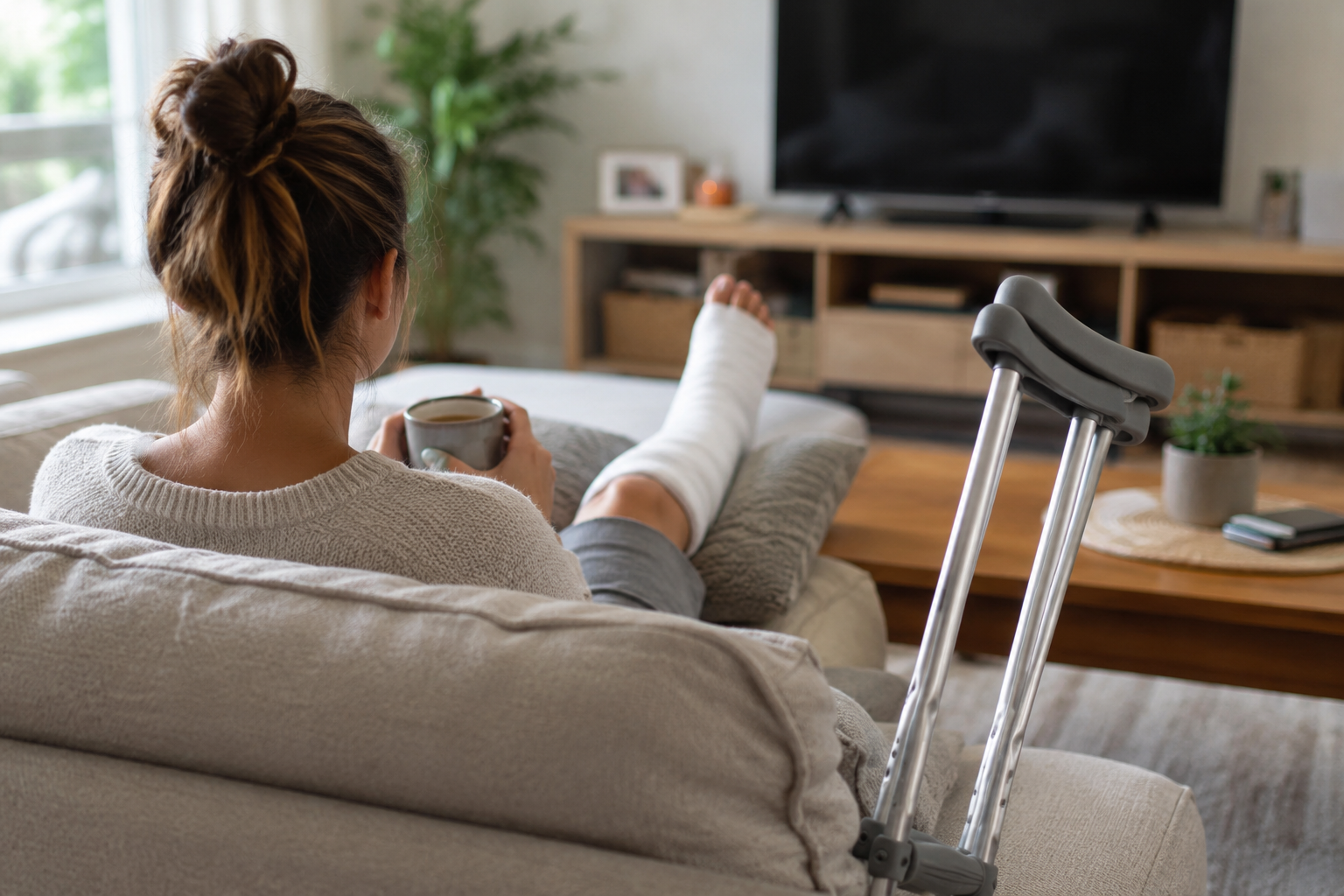
I recently had foot surgery.
As someone who works with the body and chronic pain every day, I assumed I had a reasonable sense of what to expect. And in some ways I did — but there were still things I genuinely wish someone had told me beforehand. Practical things. Small things that made a bigger difference than I anticipated.
So I’m sharing them here, in case you or someone you love is heading into foot or ankle surgery and wants to feel a little more prepared.
Before Your Surgery Date
If you know your surgery date in advance, use that time wisely.
Work with a physiotherapist or Pilates instructor to build your strength before your operation. The stronger you go in, the better your body tends to handle the early recovery period. This is especially true for your legs and core, which do a lot of the heavy lifting when you are on crutches.
If you will be non-weight bearing after surgery, start practising on crutches before your operation date — and specifically, practise on stairs. It takes a surprising amount of single-leg strength to go up and down safely, and learning that before surgery is far easier than figuring it out in the days afterwards when you are tired, sore, and on pain relief.
A practical tip: leave a set of crutches at both the top and bottom of your stairs so they are always where you need them. It sounds simple, but it makes a real difference when you are navigating your home on one leg.
Setting Up Your Home
Bathroom preparation is everything. This is the area I found most challenging, and where a little forward planning saved me a lot of frustration.
Shower seating: A metal bar stool from a hardware store works brilliantly as a shower seat. It sits at a better height than most purpose-built shower chairs for doing your hair, skincare routine, and teeth — all the things you cannot safely do while balancing on one leg or gripping crutches. One important tip: run hot water over the stool before you sit on it. Cold metal is a very unpleasant surprise. A hand towel placed on the seat after your shower also gives you somewhere dry and stable to sit while you dry off.
Keeping your cast dry: Use a plastic bag sealed with self-adhering wrap to protect your cast in the shower. A nurse shared this tip with me — a roll of wrap that sticks to itself is remarkably effective at keeping water out. It is worth asking your medical team about this before you go home.
Toilet: A clip-on raised toilet seat (around $80 from a hardware store) is worth every cent. Getting up off a standard low toilet on one leg is genuinely hard work, and having that extra height removes a daily struggle.
Getting around the house: A knee walker is significantly easier to use than crutches on flat surfaces. You can often find them secondhand through online marketplaces. Keep in mind they are not suitable for outdoor pavement or uneven surfaces, so you will still need your crutches for outside. Shopping centres with internal car parks are much easier to navigate with a knee walker than those with outdoor car parks.
The Recovery Mindset
This is the part that surprised me most.
The anaesthetic and pain relief will affect you more than you might expect. You will sleep a lot in the early days, and your body needs that sleep. Try not to fight it. If your body is telling you to close your eyes, close them.
At the same time, say yes to every offer of company. Whether it is a friend coming for a coffee or someone popping in for a quick visit — connection matters enormously during a recovery that can run anywhere from six weeks to three months. You will appreciate it far more than you realise.
Do your physiotherapy exercises, even on the days when they feel as though nothing is happening. They are doing important work — quietly reconnecting your brain and your body, rebuilding movement patterns, and laying the foundation for everything that comes next. The results are not always visible straight away, but that does not mean the work is not being done.
The Most Important Thing
Listen to your surgeon.
If they tell you to stay off your foot, stay off it. If they want you non-weight bearing for a specific period, honour that. There is always a clinical reason, even when you cannot see it or feel it. Healing that is not visible on the outside is still very much happening on the inside.
Recovery from foot or ankle surgery asks a lot of you — physically, practically, and emotionally. But with a little preparation, the right equipment, and some patience with yourself, it is entirely manageable.
I hope something here makes your recovery a little easier. 🌿
— Robyn
Robyn Robson is the practitioner and owner of Morningside Remedial Therapy in Brisbane, and a Foundation Member of Finch Therapy — a non-invasive, non-manipulative methodology for chronic neuro-musculoskeletal pain. The clinic’s sole service is Finch Therapy.
⚠️ The content in this post reflects personal experience only and does not constitute clinical advice. Always consult your own surgeon, physiotherapist, and health team.